info@wpimusic.com
Onsite Assessed by Intertek Exporting to 4 Major Regions
0%

Musical Instrument Accessories rarely attract the attention given to a new guitar, keyboard, or drum kit. Yet a missing cable, worn string, or unstable stand can interrupt a rehearsal in seconds. The right small essentials help musicians protect equipment, prepare reliably, and spend less time solving avoidable problems.

Industry data offers useful context, though it cannot decide what belongs in every musician’s bag. Grand View Research’s Musical Instruments Market Size, Share & Trends Analysis Report estimated the global musical-instrument market at $16.8 billion in 2022 and projected 6.3% annual growth from 2023 to 2030. That broad market includes instruments, not just accessories. The U.S. Bureau of Labor Statistics also projects 4% employment growth for musicians and singers from 2023 to 2033. More active music-making may mean more frequent equipment use, but it does not make every accessory essential.

Small things matter. This guide covers ten practical choices, from tuners and spare strings to cases, cables, and maintenance supplies. Each item earns its place through a clear job: keeping an instrument secure, helping performances run smoothly, or making practice easier. A clip-on tuner in a gig bag, for example, takes little space but can help check tuning between songs. Not every player needs every item. That is worth remembering. Instrument type, playing style, budget, and venue all change the list. Some recommendations may be less useful than they sound; choosing carefully is part of being prepared.
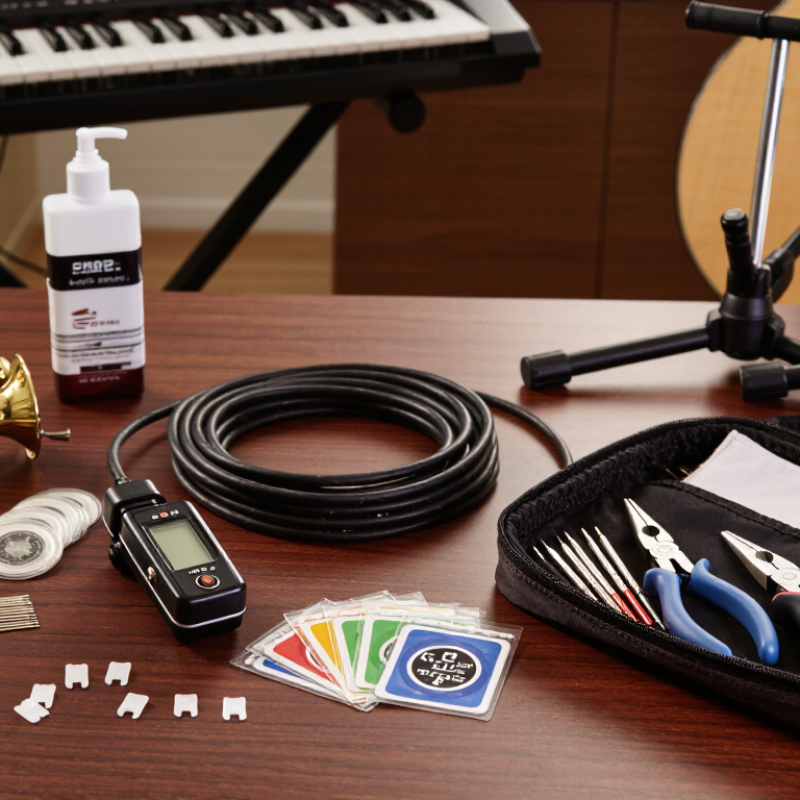
Top 10 Musical Instrument Accessories Every Musician Needs

Defining Essential Accessories with NAMM’s 2023 U.S. Music Products Data

NAMM’s 2023 U.S. Music Products Industry Data put U.S. musical-products retail sales at about $17.1 billion in 2022. That figure covers a broad market, not a ranking of essential accessories. It offers useful context, but cannot show which items every musician needs. A practical kit might include a tuner, metronome, spare strings or reeds, picks, and a strap. Add a stable stand, a protective case, a cleaning cloth, spare batteries, and a dependable cable when your instrument needs one. Small details matter.

These accessories can prevent familiar interruptions: drifting pitch, a snapped string, a dead battery, or a crackling cable. For percussionists and acoustic players, cables may matter less; sticks, mallets, or a suitable case may matter more. Choose for your instrument and playing setting, not for a universal checklist. NAMM’s sales figure shows the sector’s scale; hands-on needs depend on use, maintenance, and replacement frequency. Keep it simple.

A checklist can overstate certainty. Some accessories may sit unused in a crowded case, while one missing item disrupts every rehearsal. Start with the problem that interrupts your playing most often, then review your kit after a few sessions.

Sound and Timing Tools: A440 Tuners, Metronomes, Picks, and Replacement Supplies

A dependable accessory kit keeps small problems from interrupting rehearsal. An A440 tuner gives players a shared pitch reference: ISO 16:1975 specifies A at 440 Hz. Not every ensemble uses that pitch, so check the conductor’s or group’s setting before tuning. A clip-on tuner is handy beside a noisy drum kit, while a metronome helps expose rushing during difficult passages. Keep spare picks, strings, reeds, batteries, and instrument-appropriate cleaning supplies in a labeled pouch. Small things matter.

NAMM’s 2024 Global Report estimated U.S. music-products retail sales at $17.1 billion in 2022, a measure of the broad equipment ecosystem musicians rely on. Yet equipment cannot replace careful listening. Tuners may jump between readings in loud rooms, and a metronome can make a player rigid if used without musical phrasing. I still find it useful to check tuning by ear after the display settles. Not perfect, but practical.

Tips: Set the metronome below your target tempo, then raise it in small steps. Test replacement strings or reeds before a performance, not minutes before it. Store picks by thickness, and keep one spare battery with the tuner. Labeling the pouch sounds fussy; it also saves time when the room is already waiting.

Playing Setup: Straps, Instrument Stands, and Music Stands

A comfortable playing setup begins with a strap that suits both the instrument and your body. Adjust it so your fretting hand can reach without lifting your shoulder. The instrument should feel balanced, not pull forward or press painfully against your ribs. Check the attachment points and stitching for wear before playing. Small details matter. A strap that feels fine for ten minutes may become tiring during a long rehearsal, so test the fit while standing and moving.

Instrument stands keep valuable gear within reach, but stability matters more than a compact shape. Match the stand to the instrument, and open every support fully on a level floor. Gently check for wobbling before placing the instrument down. Keep stands clear of doorways, cables, and heaters. I have seen players trust a stand because it looked sturdy; that quick judgment deserves a second look. Check it again.

A music stand should hold pages at eye level without blocking other musicians. Set its height and angle while seated or standing in your usual playing position. Leave enough room to turn pages without bumping the instrument. For outdoor rehearsals, use page clips when a breeze could scatter loose sheets. A crowded setup can seem harmless until a music stand tips or a strap slips, so leave a little space around each piece of equipment.

Protection and Care: Cases, Cleaning Kits, and Humidifiers

A fitted case is the first line of protection against knocks, dust, and sudden temperature changes. Check that the instrument cannot slide inside when the case is closed. A soft lining helps, but trapped moisture can still cause problems. After playing, wipe fingerprints and perspiration from the instrument with a clean, dry cloth. Use only a suitable cleaner; household sprays may leave residue or damage finishes. Small detail. Clean mouthpieces, strings, and keys according to the instrument maker’s care guidance, and let damp parts dry before storage. Cleaning kits are useful only when their brushes and cloths stay clean, too.

Humidity needs attention, especially for wooden instruments. The USDA Forest Products Laboratory’s Wood Handbook reports that, at 70°F, ordinary wood’s equilibrium moisture content is about 6.2% at 30% relative humidity, 9.2% at 50%, and 13.0% at 70%. These figures describe wood generally, not every instrument, but they show why big humidity swings matter. A small hygrometer inside the room or case can reveal changes that comfort alone misses. Use a humidifier only when conditions call for it, and check levels regularly; too much moisture is not safer. I find it tempting to treat one “ideal” number as a guarantee, but materials and climates differ. Follow instrument-specific guidance, and inspect for loose joints, sticky keys, or unusual cracks.

Top 10 Musical Instrument Accessories Every Musician Needs - Protection and Care: Cases, Cleaning Kits, and Humidifiers

Accessory Suitable For Main Protection or Care Benefit What to Look For Care Tip
Padded gig bag Guitars, keyboards, and other portable instruments Cushions against light bumps and helps keep dust and rain off during short trips. A close fit, secure closures, durable stitching, and comfortable carrying straps. Let the bag dry fully if it becomes damp; avoid storing a wet instrument inside.
Hard-shell case String instruments, woodwinds, brass, and other delicate instruments Provides a rigid outer barrier against impacts during transport and storage. A snug interior, reliable latches, a sturdy handle, and supports shaped for the instrument. Check the lining and latches regularly for wear or loose parts.
Instrument cleaning kit Many instrument types, with tools chosen for the specific instrument Helps remove fingerprints, dust, and residue that can build up with regular use. Soft, lint-free cloths and instrument-safe brushes; avoid unapproved household cleaners. Use separate cloths for different finishes and follow the instrument maker’s care guidance.
String-cleaning cloth Guitar, bass, violin, and other string instruments Wipes away skin oils and perspiration from strings after playing. A clean, soft cloth that will not scratch the instrument’s finish. Wipe strings after playing and wash or replace the cloth when it becomes soiled.
Woodwind swab and cleaning rod Flute, clarinet, saxophone, and similar woodwinds Removes moisture from the bore after playing, helping keep the instrument clean and dry. A correctly sized swab and a smooth rod designed for the instrument. Swab after each playing session and let the parts dry before putting them away.
Brass mouthpiece brush Trumpet, trombone, horn, and other brass instruments Helps clear residue from the mouthpiece cup and shank. A brush sized for the mouthpiece, with bristles that do not damage its surface. Clean the mouthpiece periodically with warm water and mild soap, then rinse and dry it.
Instrument humidifier Acoustic wooden instruments, especially in dry indoor conditions Helps reduce rapid moisture loss that can contribute to wood shrinkage or cracking. A model made for the instrument and clear instructions for safe placement and use. Monitor room humidity and follow the instrument maker’s guidance; do not let the device leak or touch wood improperly.
Digital hygrometer Instrument rooms, cases, and storage areas Shows relative humidity so players can identify conditions that may be too dry or too damp. An easy-to-read display and a placement suitable for the space being monitored. Check readings regularly and compare them with the instrument maker’s recommended range.
Polishing cloth Finished wood, metal, and lacquered instruments, using a suitable cloth for each surface Removes fingerprints and light surface dust without abrasive scrubbing. A soft, clean, lint-free cloth; use only products approved for the instrument’s finish. Keep cloths free of grit and do not use one that has collected dirt or polishing compound.
Stand with protective contact points Guitars, basses, keyboards, and other instruments designed for stand storage Keeps an instrument accessible while reducing the risk of accidental falls. A stable base, secure supports, and contact materials compatible with the instrument’s finish. Place it on a level surface away from walkways, heat sources, and locations where it can be knocked over.

Comparing Accessories by Instrument, Use, and Published Safety Standards

Top 10 Musical Instrument Accessories Every Musician Needs

Useful accessories depend on the instrument, the task, and the risks involved. A guitarist’s padded strap can reduce shoulder pressure during long rehearsals, while a stable, height-adjustable stand keeps an instrument within reach. For drums and amplified performances, hearing protection deserves equal attention. Small details matter.

The NIOSH Criteria for a Recommended Standard: Occupational Noise Exposure sets a recommended limit of 85 dBA over eight hours, with allowable exposure time halving for each 3 dB increase. Musicians can use this benchmark when choosing earplugs or earmuffs for loud practice. Published hearing-protector ratings may use ANSI S3.19 laboratory testing, but fit affects protection in real use. A rating is not a promise. Try protectors during rehearsal, and check that speech and cues remain manageable.

Other choices should match the instrument and setting. A wind player may need a cleaning swab and a case that prevents damp accessories from pressing against delicate parts. Keyboard players should check that power accessories match the instrument’s requirements and meet applicable electrical safety standards, such as IEC 62368-1 where relevant. Drummers may benefit from a sturdy throne and properly fitted ear protection; a stand that wobbles on a flat floor is still a poor choice. One gap remains: accessory labels do not always explain real-world durability, so inspect wear and fit regularly.

FAQS

Which accessories belong in a basic music kit?

Consider a tuner, metronome, spare strings or reeds, picks, and a strap. Add a case, cleaning cloth, or batteries when your instrument needs them. Keep it simple.

Does industry sales data identify essential accessories?

No. U.S. musical-products retail sales reached about $17.1 billion in 2022, but that figure covers the whole market. It does not show what every musician needs.

How should I choose a strap?

Adjust it so your fretting hand reaches comfortably without lifting your shoulder. Test it standing and moving; ten comfortable minutes may not predict a long rehearsal.

What should I check before using an instrument stand?

Match the stand to your instrument and open every support fully on a level floor. Check for wobbling. A sturdy appearance is not enough.

How can I set up a music stand safely?

Place the pages near eye level without blocking other players. Leave room to turn pages, and use clips outdoors when wind might scatter them.

How should I protect and clean my instrument?

Use a fitted case that keeps the instrument from sliding. Wipe it with a clean, dry cloth, and avoid household sprays that may damage the finish.

Why monitor humidity around wooden instruments?

Large humidity changes can affect wood. A hygrometer can reveal shifts that comfort alone misses; follow instrument-specific guidance rather than trusting one ideal number.

How can I avoid carrying accessories I never use?

Notice what interrupts your playing most often, then adjust your kit after a few sessions. I still sometimes pack too much. A short review helps.

Conclusion

Musical Instrument Accessories help musicians play more comfortably, maintain consistent timing, and protect their equipment. Using NAMM’s 2023 U.S. music products data as context for the range of instruments and supplies musicians use, this overview focuses on practical essentials rather than unnecessary extras. A440 tuners and metronomes support accurate pitch and steady practice, while picks and replacement supplies help players keep their instruments ready to use.

A well-organized setup also includes straps, instrument stands, and music stands suited to the player’s instrument and playing environment. Cases, cleaning kits, and humidifiers can help with safe transport and routine care, when used appropriately for the instrument. Because needs differ by instrument and situation, the article compares accessories by intended use and considers relevant published safety standards. The goal is to help musicians choose useful, compatible items that support reliable practice, performance, and long-term care.

Clara

Clara

Clara is a professional marketing specialist with a deep understanding of the company’s products, customers, and business goals. She regularly contributes expert articles to the company website, turning product knowledge and industry insights into clear, practical information that helps readers......