Choosing a Musical Instruments supplier is more than comparing prices. Global buyers must assess product quality, export experience, communication, and after-sales support. A polished catalog helps, but it cannot tell you how a guitar neck feels or whether a drum arrives safely packed. Details matter.
Duke Ellington’s often-quoted advice, “If it sounds good, it is good,” reminds buyers to look beyond specifications. Still, sound is only one measure. A school may need durable recorders and steady replenishment. A music retailer may prioritize broad choice, dependable lead times, and clear warranty terms. A professional player may care most about setup and consistency. Different needs. Different suppliers.
This guide presents 10 Musical Instruments suppliers for global buyers, with practical points for comparing their strengths. Look for transparent product information, responsive sales teams, and realistic delivery commitments. Ask about sample orders, packaging, and how defects are handled. These checks can reveal more than a large product range.
No supplier is perfect. Even strong companies may have limits in certain categories, regions, or order sizes. That part deserves attention, not excuses. Treat the list as a starting point, then verify current capabilities directly. A careful choice can reduce surprises—from a missed shipment to an instrument that needs unexpected adjustment.
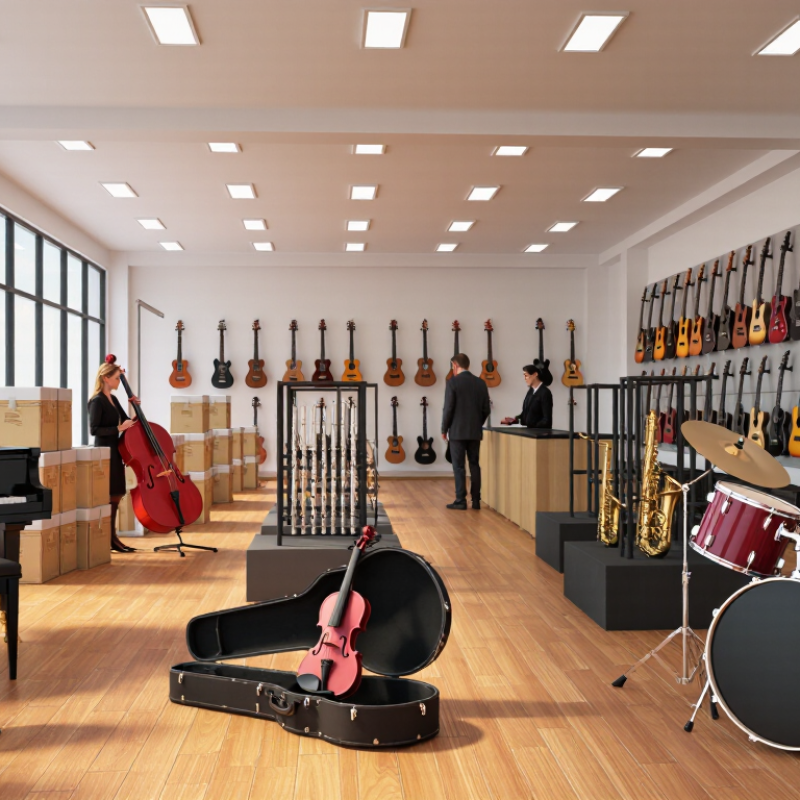
Grand View Research valued the global musical instrument market at $17.03 billion in 2023 and projects a 4.7% compound annual growth rate through 2030. That points to steady expansion, not a sudden buying boom. For global buyers, it may mean broader demand for instruments, accessories, and dependable supply. Still, a market-wide figure does not reveal how quickly each category is growing.
The numbers deserve context. A projected CAGR is an estimate, not a promise of future sales. Demand can vary by region, instrument type, school budgets, and live-performance activity. Buyers comparing suppliers should look beyond catalog size. Check material specifications, packaging, order consistency, and how carefully products are inspected before dispatch. A scratched finish or loose tuning peg can turn a bulk order into extra work.
Small details matter. Ask for current product samples and clear documentation before committing to large quantities. Compare lead times and shipping protection, too; a well-packed instrument should arrive with its setup intact. Market reports offer a useful map, but they cannot replace direct checks. Forecasts can miss. A supplier’s real performance is easier to judge through repeat orders, honest communication, and products that match their stated specifications.
UN Comtrade turns HS 9201–9209 into a practical map of musical-instrument trade. The nine headings cover pianos, string, keyboard, wind, percussion, electronic instruments, and parts. Compare annual export and import values, reported quantities, and trading partners to spot changing supplier routes. For example, a rising export value alongside flat quantities may reflect higher unit prices, not more instruments shipped. Treat that signal carefully.
Grand View Research’s 2024 Musical Instruments Market report estimates the global market at about US$17.07 billion in 2023, with projected growth of 6.3% annually through 2030. That is market revenue, not customs trade value; the two should not be compared as if they measure the same thing. UN Comtrade and ITC Trade Map help buyers examine country-level flows, but HS headings can group unlike products, while re-exports may blur where goods were made. Check units, reporting years, and mirror-trade gaps before using a country ranking. Small inconsistencies matter. I would treat the map as a starting point, not a verdict.
For global buyers, compare musical instrument suppliers against the products you actually plan to sell. A broad catalog can look impressive, but quality may vary between instrument types. Request specifications for materials, dimensions, finishes, and included accessories. Ask for current product photos and samples when practical. Check whether the supplier can maintain consistent details across repeat orders.
MOQ affects more than the first purchase. Confirm minimums by model, color, and packaging, then calculate the total order value. Review relevant certifications and test reports for your destination market; verify document scope and validity rather than relying on a logo or general claim. Ask for written lead times, export documents, packing details, and a named contact for shipment issues. Small details matter.
Tips: Ask for a sample invoice and carton measurements before ordering. Compare answers in writing. A supplier’s fast reply is useful, but it does not prove reliable production. Scoring suppliers can help, though the numbers are imperfect; leave room for sample results and clear communication.
Supplier Evaluation: Compare Product Range, MOQ, Certifications, and Export Support
Illustrative buyer-defined evaluation weights, not supplier-specific scores or market-survey findings. Adjust the weights to match your sourcing priorities; verify certifications, minimum order quantities, and export capabilities directly with each supplier.
Global buyers need more than a low quotation. NAMM’s 2024 Global Report estimated worldwide music-products retail sales at about US$17.5 billion in 2022, showing a substantial, varied market. A practical shortlist can include acoustic-instrument specialists for repairable guitars; digital-piano suppliers for compact studios; string makers for orchestras; brass and woodwind specialists for school programs; percussion makers for ensembles; integrated audio suppliers for rehearsal rooms; education-focused wholesalers for classroom bundles; private-label manufacturers for custom ranges; regional distributors for local stock; and online wholesalers for broad catalogs. Each serves a different buyer. Fit matters more.
Strengths are only useful when matched to the order. A school may value durable finishes, replacement parts, and consistent sizing. A studio buyer may prioritize quiet key action, dependable electronics, and clear warranty terms.
Regional distributors can shorten replenishment time, while direct manufacturers may offer more customization. Neither option is automatically better. A catalog can look impressive, yet spare-part access may be weak.
Tips: Request sample units, packing photos, and written lead times before placing a large order. Compare landed cost, not just unit price; include freight, protective packaging, and likely service needs. Ask how defects are handled and whether replacement parts remain available. Check the details. Even a careful comparison can miss seasonal delays, so leave room in the schedule.
A reliable musical instrument supplier should provide a sample before a large order is approved. Test it under ordinary playing conditions, not just in a showroom. Check tuning stability, finish, fret edges, key movement, and the case fittings. For drums or percussion, listen for uneven resonance across several strikes. Keep the approved sample and record its model, materials, and agreed specifications. Small differences matter.
Set the Incoterm and named delivery place clearly in the purchase contract. These details affect who arranges transport, insurance, and import procedures. Confirm packaging dimensions and shipment dates in writing; a low unit price can be misleading when freight is added. Ask for a written quality-control plan, including inspection timing, acceptable defect limits, and photos of packed goods. A checklist helps, but it can still miss a problem.
Warranty terms deserve the same care as price. Confirm coverage period, excluded damage, replacement-part availability, and who pays return freight. Request a simple claims process with a response timeframe. Keep inspection notes and correspondence together. Even careful buyers can overlook a detail, so review the final order against the sample before payment milestones are reached.
Buyer’s planning guide: The anonymous supplier profiles below represent common supplier types, not verified or ranked businesses. MOQ, sampling, lead time, inspection, and warranty terms vary by product, order size, destination, and contract. Confirm all terms in writing before placing an order.
| Supplier Profile | Typical Product Focus | Sample Checklist | Incoterms to Discuss | Quality-Control Checklist | Warranty Terms to Confirm | Lead-Time and Order Notes |
|---|---|---|---|---|---|---|
| 1. String-Instrument Workshop | Acoustic guitars, violins, ukuleles, and related string instruments. | Request a finished sample in the intended wood, finish, setup, and hardware; confirm whether the sample fee is credited to a production order. | Compare FCA or FOB for buyer-arranged freight with CIF or DAP quotes that specify included transport costs and delivery point. | Check dimensions, finish, joints, tuning stability, action or setup, intonation, and packaging protection. Agree on inspection criteria before production. | Confirm coverage period, eligible defects, exclusions for wear or misuse, repair or replacement process, and who pays return freight. | Custom materials and finishing can extend production. Approve a signed sample or specification sheet before mass production. |
| 2. Brass-Instrument Manufacturer | Trumpets, trombones, saxophones, and other brass or wind instruments. | Test sample playability, valve or slide action, finish, included accessories, and protective case; document the model and configuration. | For containerized shipments, compare FCA, FOB, or CIP. Define the named place or port and confirm who handles export clearance. | Inspect operation, alignment, leaks where applicable, surface finish, accessory fit, and a representative functional test against agreed specifications. | Ask whether valves, pads, springs, finishes, and accessories have different coverage; obtain the claim procedure and service-part availability in writing. | Confirm whether production time includes final testing and packing. Request a schedule with a pre-shipment inspection window. |
| 3. Drum and Percussion Supplier | Drum kits, hand percussion, stands, and related accessories. | Request samples of shells, heads, hardware, and finishes; check that the approved sample matches the quoted configuration. | Compare FOB or FCA with DAP or DDP only after clarifying the named destination and responsibility for import formalities, duties, and taxes. | Check shell construction, hardware stability, tuning components, finish consistency, included parts, and transit packaging. | Specify coverage for manufacturing defects separately from consumables such as heads, sticks, and other wear items. | Confirm whether a quote covers a complete set or individual components. Carton dimensions and protective packing affect freight planning. |
| 4. Keyboard and Digital-Piano Supplier | Electronic keyboards, digital pianos, controllers, and compatible accessories. | Test the exact model, power supply, language settings, included software or accessories, and relevant regional plug or voltage configuration. | Compare FCA, FOB, or CIP. For DAP or DDP, confirm the delivery address and explicitly identify import-duty and tax responsibilities. | Agree on checks for key response, controls, display, ports, sound output, power-on function, firmware, and serial-number records. | Confirm warranty territory, start date, authorized service route, repair turnaround expectations, and treatment of electronic components and batteries. | Verify model availability, production allocation, and compatibility requirements. Obtain written confirmation of the final hardware and software specification. |
| 5. Pro-Audio and Amplification Supplier | Instrument amplifiers, speakers, mixers, microphones, and audio accessories. | Request a working sample and test it with the intended power standard, connectors, signal sources, and accessories. | Use FCA or FOB for buyer-controlled shipping, or compare CIP or DAP offers with clearly stated transport and insurance scope. | Check power-up, controls, connectors, output, noise, included components, labeling, and packaging. Define an agreed test protocol and sampling plan. | Clarify coverage for electronic parts, speakers, cables, and accessories; confirm troubleshooting, repair, replacement, and freight procedures. | Check power compatibility and regulatory documentation for the destination market before confirming the order and shipping schedule. |
| 6. Wind-Instrument Specialist | Flutes, clarinets, recorders, and other woodwind instruments. | Evaluate a sample for assembly, key movement, sealing, finish, case fit, and the exact materials and accessories offered. | Compare FCA or FOB with DAP options. State the named place and confirm which party handles import clearance and applicable charges. | Check key alignment, pad condition, assembly fit, functional play test, surface quality, and protective packaging. | Confirm whether setup adjustments, pads, and other wear components are covered and where warranty service can be performed. | Ask whether instruments receive final adjustment before dispatch and whether seasonal or custom material requirements affect lead time. |
| 7. Orchestral Strings and Accessories Supplier | Strings, bows, cases, rosin, and other orchestral accessories. | Request samples from the specified material, size, and grade; check labeling, packaging, consistency, and any required certificates. | FCA or CPT may suit consolidated shipments; compare the quoted named place, transport scope, and export-clearance responsibility. | Set measurable acceptance criteria for dimensions, materials, finish, labeling, quantity, and batch consistency. | Ask how defects are documented and reported, which items are excluded as consumables, and whether claims require photos or retained samples. | Confirm batch identification and shelf-life or storage requirements where relevant. Small accessories may be consolidated with larger orders. |
| 8. Educational Instrument Supplier | Student instruments, classroom sets, entry-level percussion, and learning accessories. | Request a representative unit and inspect included accessories, labeling, instruction materials, case or packaging, and ease of setup. | Compare FOB or FCA with DAP for school or warehouse delivery; specify the named destination and delivery responsibilities. | Agree on incoming checks for quantity, model, basic function, visible damage, labeling, and batch sampling across the order. | Confirm claim deadlines, acceptable evidence, replacement-part availability, and whether the warranty applies to institutional use. | For classroom orders, verify carton counts, assortment details, delivery appointments, and the required arrival date before booking production. |
| 9. Custom-Order Instrument Supplier | Private-label or specification-built instruments and accessories across several categories. | Approve a pre-production sample, artwork, packaging, labels, and a signed specification; define whether sample revisions incur extra charges. | Compare FCA or FOB for buyer-managed logistics with CIP or DAP offers; identify the named place and insurance scope in the contract. | Use an approved specification, reference sample, defect classification, inspection timing, and agreed pre-shipment acceptance procedure. | Write down the coverage period, defect remedies, response time, replacement terms, exclusions, and responsibility for transport costs. | Build approval time, material sourcing, packaging production, and inspection into the schedule. Changes after sample approval may affect cost and timing. |
| 10. Multi-Category Instrument Distributor | Mixed assortments of instruments, accessories, and related products from multiple production sources. | Sample each critical product category and confirm the source, model, specification, packaging, and substitutions permitted for every line item. | Compare FCA, FOB, or CPT for consolidated cargo; confirm responsibility for export clearance, freight, insurance, and delivery point. | Require line-item checks, quantity reconciliation, product-specific functional tests, and a consolidated packing list tied to the purchase order. | Confirm whether claims are handled centrally or by product source, and obtain separate coverage details where product categories differ. | Check stock status for each item, partial-shipment options, back-order handling, and whether all products can meet the same delivery window. |
One estimate placed it at $17.03 billion. Another put it near $17.07 billion. Reports can differ.
Estimates range from 4.7% to 6.3% annual growth. These are projections, not promises.
Trade codes 9201–9209 cover pianos, strings, keyboards, wind instruments, percussion, electronic instruments, and parts. Check category details.
Not always. Export value can rise while reported quantities stay flat, possibly because unit prices increased.
Request samples, written specifications, clear lead times, and packing photos. A loose tuning peg matters.
Compare landed costs, including freight, protective packaging, and likely service needs. Unit price alone can mislead.
Schools may need durable finishes and replacement parts. Studios may prioritize quiet key action and reliable electronics.
No. Reporting gaps, re-exports, and broad product categories can blur the picture. Direct checks still matter. I might miss something.
The global market for Musical Instruments was valued at $17.03 billion in 2023 and is projected to grow at a 4.7% compound annual rate through 2030, creating opportunities for buyers across many regions. This overview explains how to examine international trade flows for product categories covered by HS codes 9201–9209 using UN Comtrade, then assess suppliers against practical criteria such as product range, minimum order quantities, certifications, and export support.
It also presents ten leading supplier profiles by general strengths and buyer suitability, without focusing on brand names. For a sound procurement decision, buyers should request samples, clarify Incoterms, establish quality-control requirements, and review warranty terms before placing an order. Together, these steps offer a clear framework for comparing suppliers, managing purchasing risks, and sourcing instruments that match specific business needs.